

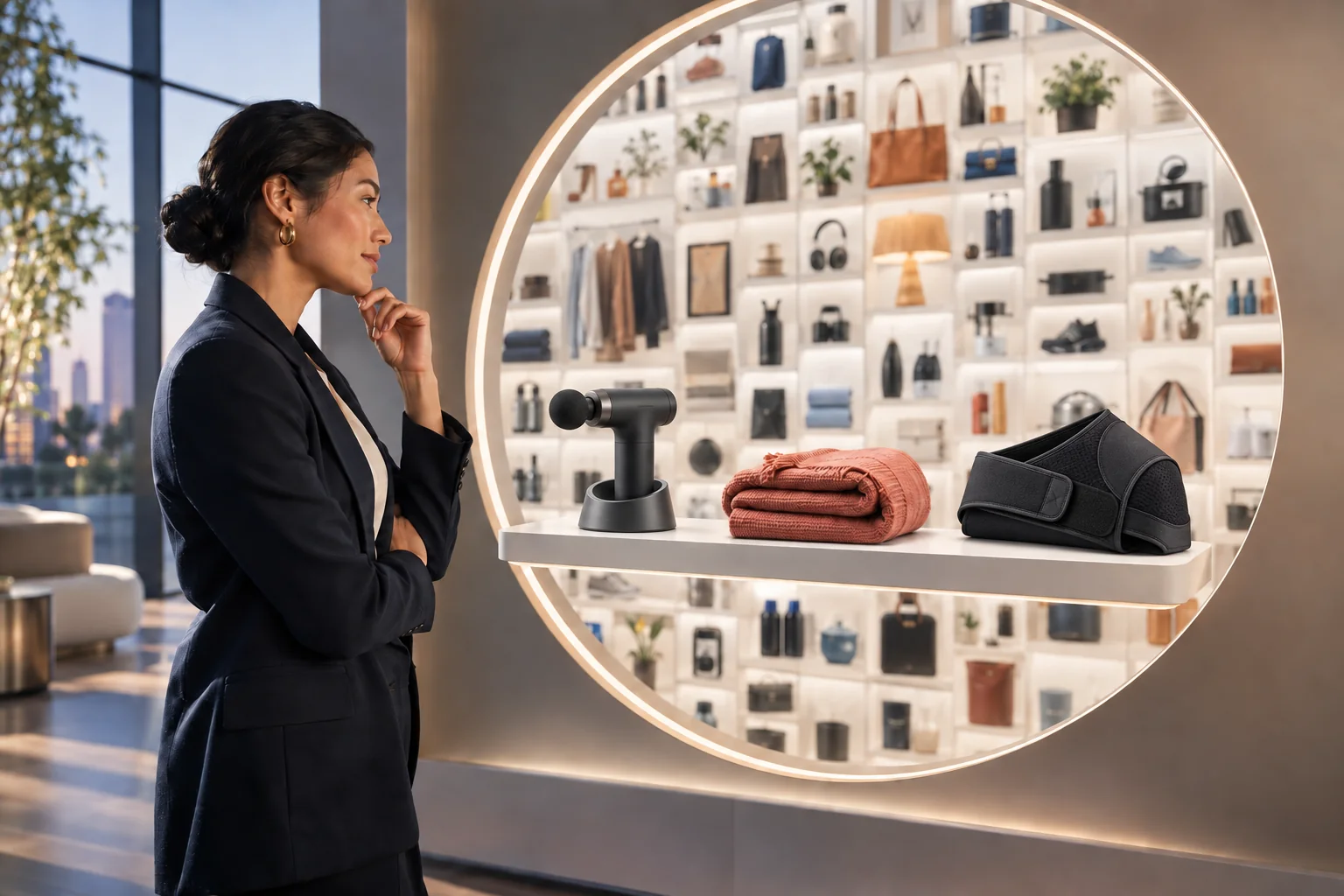
A shopper looking for a massage gun used to begin with the product. They searched the category, scanned the results, opened several product pages, and compared the images, features, price, and reviews. That journey gave brands several chances to compete. We could earn the search position, buy the placement, improve the main image, sharpen the comparison, and give the shopper a reason to choose us.
“My shoulder hurts. What products might help?”
That question starts somewhere else. The shopper has not chosen a product category. An AI shopping assistant may decide that a massage gun, heat wrap, topical product, stretching tool, or something else belongs in the answer. It may then narrow those possibilities to a few products before the shopper visits a product page.
The change goes well beyond a new search box. A brand may first have to be understood as relevant to the customer's problem, then survive the assistant's comparison, and only then get the opportunity to sell through the product page. I support the convenience. Helping someone move from a vague need to a useful set of options can save time and reduce frustration. As a commercial operator, I also want to understand how brands earn the chance to be considered.
The decision may begin before the product page
Most ecommerce teams are built around known product demand. The customer searches for “massage gun,” “smart scale,” or “eye massager,” and the team works to win that search. A need-based question changes the starting point because the shopper can describe an activity, occasion, or problem without knowing which product category belongs in the solution.
Amazon says Alexa for Shopping can help customers discover products by activity, purpose, and other use cases, then compare categories and products. It also gives the example of a shopper uploading a photo of a stained rug and asking how to remove the stain. The assistant analyzes the image and recommends relevant cleaning supplies. Amazon
The product page may now enter the decision later
- The needThe shopper describes a problem, activity, or occasion.
- The categoryThe assistant decides which types of products belong in the answer.
- The shortlistA few products are selected and explained.
- The product pageImages, comparisons, and the full product story finally get their chance.
The commercial competition now begins one step earlier. A brand can be excellent at selling a massage gun to someone who already wants one and still be absent when the shopper asks a broader recovery question. Recovery can include percussion, heat, compression, stretching, topical products, sleep, and hydration. Weight management can include a scale, wearable, app, nutrition product, or coaching service. In these journeys, categories compete before brands do.
I have spent years working in consumer businesses where the details on a product page mattered. Which image earns attention? Which comparison makes the difference clear? Which benefit helps the customer imagine using the product? Which review removes the final concern? Target is now using AI-powered photo search to turn visual inspiration into product discovery, and its Review Insights feature groups customer feedback around attributes such as suction, durability, weight, and ease of use. Target Amazon also supports photo-based search alongside its conversational shopping assistant. Amazon
People still choose products with their eyes as well as the facts. Images help someone notice a product, understand it quickly, and imagine owning it. A well-built page can create desire, explain a use case, and make a complicated benefit feel obvious. If the assistant narrows the field first, some of that work never gets the chance to do its job. The product page still matters, but it may enter the journey later and for fewer products.
AI is becoming part of the merchandising experience
Brands have never controlled the whole retail environment. Retailers decide where products appear, how categories are organized, which placements are available, and what the shopper can filter or compare. Paid placement at least created a defined commercial conversation. A brand generally knew what it was buying, where the product would appear, and how the placement performed. Search reporting and product-page analytics gave the team something concrete to improve.
AI recommendations add a less visible layer. The assistant can interpret a need, compare options, and present an answer without showing the shopper every step used to get there. No single listing change will guarantee a recommendation. Retailers use many signals, and their systems will continue to change. The assistant is becoming part of the merchandising experience while the commercial rules around that placement are still taking shape.
Best Buy offers a useful signal of where this is going. Its marketplace now includes nearly one million products from more than 5,000 brands, and customers can shop Best Buy products and complete purchases within ChatGPT. Best Buy More assortment creates more choice, but it also increases the amount of sorting required before a manageable answer can be presented. The retailer's AI may increasingly decide which part of that assortment the shopper sees first.
Retail readiness now includes being understood.
Traditional retail readiness covers the work a company needs to sell through the channel: assortment, pricing, inventory, packaging, fulfillment, returns, compliance, and the ability to meet the retailer's operating requirements. AI shopping adds another commercial test. Can the retailer, marketplace, or shopping assistant explain who the product is for, what it does well, and why it belongs in the consideration set?
Several departments shape that answer. Product defines what the item can credibly do. Marketing turns that into a reason to care. Ecommerce builds the page and manages the content. Sales understands the retailer, its customer, and the commercial position. Customer reviews introduce another version of the story, often in language the company did not write. When those pieces disagree, the business has not made the product easy to understand.
The first questions are commercial:
- Which customer problem should lead someone to this product?
- Which other categories could solve the same problem?
- What is the clearest reason this product should survive the comparison?
- Does the visual story reinforce that reason once the shopper reaches the page?
- Who owns the answer when it differs across retailers and the brand's own site?
Start with the questions customers actually ask
I would begin with a short list of questions customers may ask before they know the category. Include broad needs, use cases, comparisons, and ordinary language. For a recovery brand, that could range from “What is the best massage gun?” to “What products might help after a hard workout?” The first question tests competition within the category. The second tests whether the category enters the answer at all.
Run those questions through the shopping assistants and retailer experiences that matter to the business. Record four things:
- Which product categories appear.
- Which brands and products make the shortlist.
- What reasons the assistant gives for each recommendation.
- How the answer changes when the question becomes more specific.
A handful of searches will not reveal an algorithm. They can still expose a customer journey the company may be missing. Compare the assistant's answer with the commercial story the company intended. If the category does not appear, the issue may sit above the product page. If the category appears but the product does not, examine the offer, proof, reviews, availability, price, and retailer fit. If the product appears for the wrong reason, the brand may have a positioning problem that better listing content will not solve.
This review belongs alongside search performance, advertising, conversion, and retailer feedback. It gives the team another view of whether the product is earning consideration as shopping behavior changes.
Someone has to own the whole journey
The work crosses too many functions to leave it as an ecommerce maintenance task. Commercial leadership should define the customer problems the company has a right to solve. Product and marketing should make the benefit clear and supportable. Ecommerce and marketplace teams should carry that story accurately into each retailer. Sales should bring back what the retailer and its customer are rewarding. Someone needs to see the complete picture across channels.
The transition will be uneven. Retailers will develop different tools, use different information, and create different shopping experiences. Some customers will continue searching by product name. Others will ask for advice, upload a photo, or allow an assistant to complete more of the purchase.
I would start by running the ten or twelve customer questions that matter most and putting the results in front of sales, product, marketing, and ecommerce together. The gaps will be easier to see once the whole customer journey is on the table.
Sources: public announcements and product descriptions from Amazon, Target, and Best Buy, accessed September 2026. The article distinguishes documented retailer capabilities from my commercial interpretation.